A hospital team can hand off a patient flawlessly and still struggle to share ideas across departments. A health-tech group can move quickly online yet know little about the colleagues behind the screens. The right team building activities for healthcare companies create a low-stakes setting where people can practise listening, coordination, and shared problem-solving away from the pressures of daily work.
The activity itself is only part of the decision. Healthcare organizations also have to account for shift coverage, mixed clinical and non-clinical roles, accessibility, distributed locations, and limited time. A program should fit those realities while giving the group one clear purpose. The options below show how to match a format to trust, communication, collaboration, or community impact without expecting one event to solve every workplace challenge.
Start With the Team Dynamic You Want to Strengthen
A strong healthcare event begins with a specific behaviour, not a vague request to “improve teamwork.” Trust might mean asking for help sooner. Communication might mean checking assumptions before acting. Shared purpose might mean connecting colleagues who contribute to the same mission from very different roles. When planners name the behaviour first, it becomes easier to select a program, brief the facilitator, and evaluate whether the session delivered the intended experience.
It also helps to define the participant group precisely. A leadership retreat has different needs from an all-hands event for nurses, technicians, scheduling teams, IT staff, finance, and administrators. A recently combined department may need relationship-building, while an established team may be ready to examine how information moves. The format should meet the group where it is rather than forcing every healthcare team into the same exercise.
Compare Healthcare Team-Building Formats by Goal
Use the table as a planning shortcut. The best fit depends on the goal, group configuration, available time, and whether participants can gather in one place.
| Primary goal | Program option | Best fit | Planning advantage |
|---|---|---|---|
| Trust and communication | Igniting Team Performance Workshop | In-person teams that want practice plus guided reflection | Repeated rounds make changes in communication and strategy visible |
| Shared purpose and service | Charity Wheelchair Build | Groups seeking a hands-on charitable activity | A tangible donation gives the event a clear community focus |
| Cross-team collaboration | Competition to Collaboration | Departments that need to exchange information and best practices | The format shifts success from individual teams to mutual support |
| Distributed connection | Virtual Igniting Team Performance | Remote, hybrid, or multi-site healthcare teams | Breakout challenges and debriefs create a common experience online |
Use Progressive Challenges to Practice Trust
For a team that wants to work on communication and continuous improvement, the Igniting Team Performance Workshop offers more structure than a stand-alone game. Participants move through a progressive series of challenges, repeat rounds, adjust their strategy, and discuss what changed. The exercise gives people something concrete to examine: who spoke, whose information was used, when assumptions appeared, and how the team responded after a setback.
That rhythm can suit healthcare groups because it makes teamwork observable without recreating a clinical scenario. A multidisciplinary group can focus on everyday collaboration habits while the facilitator keeps the discussion connected to the event goal. The low-physicality format can be run indoors or outdoors for groups of up to 500 or more, and the published program length is two to two and a half hours.
The debrief matters as much as the challenge. Ask participants to identify one behaviour that helped the group make progress and one that created friction. The point is not to declare a winning communication style. It is to give the team a shared example that can support a practical follow-up conversation at work.
Connect Collaboration With Community Purpose
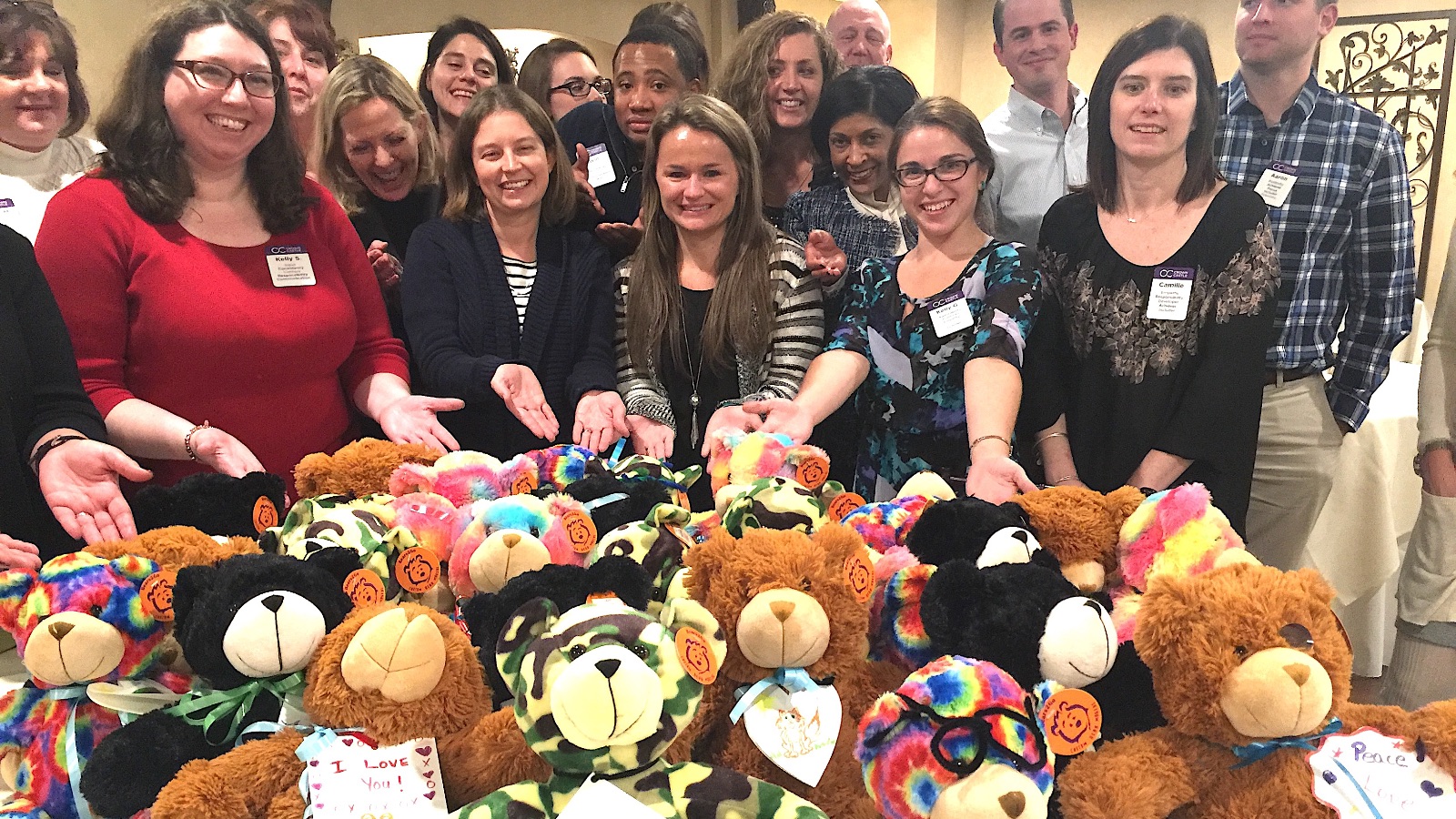
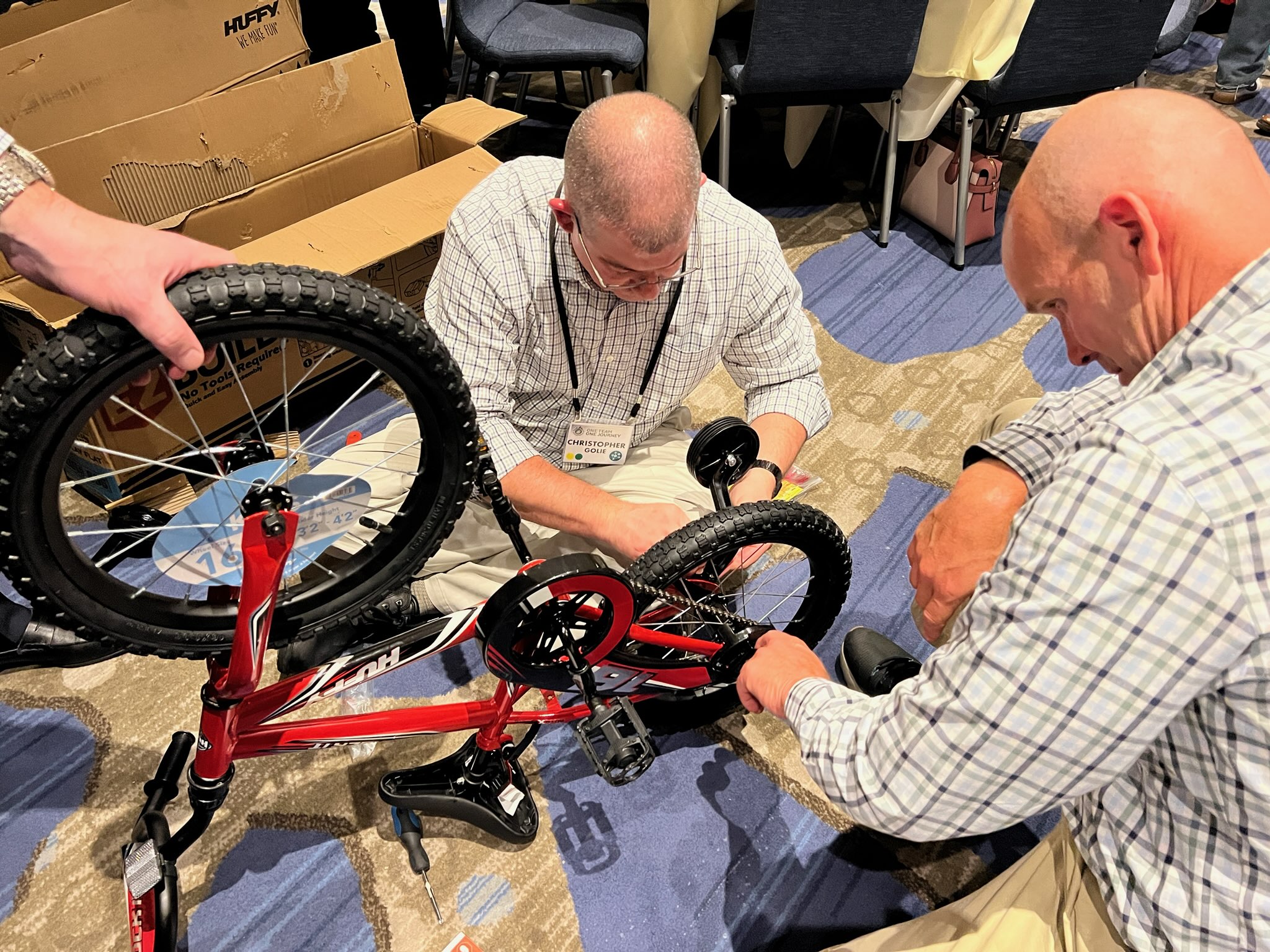
Some healthcare companies want an event that combines relationship-building with service. In the Charity Wheelchair Build, teams complete photo, video, and trivia challenges to earn tools, parts, and supplies. They then assemble and decorate new wheelchairs, prepare fleece blankets, and write notes of encouragement. Completed wheelchairs pass through an inspection station before donation.
The format creates an immediate, visible purpose for the group. It can bring clinical, administrative, technical, and leadership colleagues together around a contribution that does not depend on job title. Light competition supplies energy, while the build requires coordination and attention to the shared result.
Planners can work with a charity of their choice or ask for support identifying a local nonprofit. That coordination should begin early so the recipient relationship is genuine and the event logistics are clear. The program accommodates groups up to 2,000 or more, runs for approximately one and a half to two and a half hours, and has low physicality. Accessibility requirements should still be discussed in advance so every participant has a meaningful role.
Make Information Sharing Part of the Win
Healthcare organizations often rely on teams that perform distinct work but contribute to the same larger system. Competition to Collaboration makes that interdependence visible. Small teams first work independently on a challenge and attempt to improve their results over several rounds. Midway through the program, teams pair up and exchange what they learned. Success then depends on helping another team improve.
The shift is useful for groups that are accustomed to protecting information within a department or location. Participants experience the difference between optimizing their own result and helping the broader group succeed. A closing debrief can connect that moment to practical questions: Where does useful information stall? Which handoffs depend on informal relationships? How can one team make it easier for another to act?
This is not a simulation of patient care, and it should not be presented as one. Its value is in creating a neutral experience of information exchange, trust, and mutual support. The low-physicality program is designed for groups up to 500 or more and runs for about two to two and a half hours indoors or outdoors.
Include Remote and Multi-Site Healthcare Teams
A virtual option can give people across clinics, offices, home-based roles, or regional locations the same starting point. Virtual Igniting Team Performance uses progressive challenges in breakout rooms, followed by targeted debriefs. The structure asks teams to communicate, solve problems, and improve their approach over repeated rounds.
For remote participation, simplicity is a strength. People should receive the platform link, timing, accessibility information, and any material requirements well ahead of the session. Team assignments can deliberately mix departments or locations, but they should not isolate a participant as the only representative of a role or time zone.
The published format runs for one to one and a half hours, has low physicality, and can accommodate any group size. A shorter virtual session is useful when pulling people away from operations for half a day is unrealistic. Keep the learning goal narrow, allow time for the debrief, and give managers a simple way to continue the conversation afterward.
Plan Around Healthcare Work Realities
Even a strong program can miss the mark if its logistics ignore how healthcare teams work. Build the event plan around participation, safety, and relevance from the outset.
- Protect coverage: choose a duration and attendance model that do not leave patient-facing or essential operations understaffed. Consider repeated sessions when one time slot cannot serve the full team.
- Design for access: share mobility, sensory, dietary, language, and technology requirements with the event partner early. Make sure meaningful roles are available to people with different abilities and comfort levels.
- Mix roles intentionally: create teams that encourage new connections without making anyone responsible for representing an entire profession, department, or location.
- Keep protected information out: use neutral challenges and company-approved prompts. Do not incorporate patient details, confidential cases, or sensitive employee information into activities or custom trivia.
- Brief leaders on participation: senior leaders should join the experience without automatically directing every decision. Their behaviour can either invite or suppress contributions from the group.
- Choose one observable measure: use a short pulse question, facilitator observation, or participant reflection tied to the event goal. Measure the session experience, not clinical performance or long-term culture change after one event.
A concise planning brief can capture the audience, desired behaviour, group size, setting, time available, accessibility needs, and follow-up owner. Sharing that brief with the facilitator prevents generic delivery and keeps the program focused on the organization’s actual objective.
Build the Event Around One Clear Goal
Healthcare team building works best when the purpose is easy to state. Choose trust, communication, cross-team collaboration, or community impact as the primary goal, then select a format that lets people experience that behaviour together. Support the activity with thoughtful logistics, an honest debrief, and one realistic follow-up action.
We can help you match group size, schedule, setting, and participation needs to a facilitated program that gives your healthcare team a useful shared experience. Talk with Team Building Nation about building an event around the trust or purpose goal that matters most to your organization.