The best Raleigh corporate team building ideas do more than give employees something fun to do for two hours. They give people a shared problem to solve, force useful communication across roles, and create an outcome the group can actually point to when the event is over.
That is how we approach corporate team building in Raleigh at Team Building Nation. Games can absolutely be part of the experience, but the event should have a reason behind them. For one team, that might be cross-department communication. For another, it may be creative problem-solving, knowledge sharing, or getting people who normally work in separate functions to depend on one another.
Raleigh gives planners plenty of options. The more important decision is choosing an activity that fits what your team actually needs.
Start With the Team Outcome, Not the Activity
A strong Raleigh team building event starts by deciding what you want employees to practise together. Once that is clear, the right format becomes much easier to choose.
We usually look beyond broad goals like “boost morale” or “have fun.” Those can happen naturally, but they are difficult to plan around.
More useful objectives include:
- improving communication between departments;
- practising delegation under time pressure;
- encouraging teams to share information;
- creating opportunities for quieter employees to contribute;
- breaking down silos;
- strengthening creative problem-solving;
- reconnecting a hybrid or distributed team;
- giving employees one meaningful shared accomplishment.
The activity then becomes a tool for creating that experience.
That distinction matters. A competitive game show may be perfect for a conference break, while a team dealing with cross-functional friction may get far more value from a challenge where separate groups cannot succeed unless their work connects.
Raleigh Corporate Team Building Ideas That Create a Real Shared Outcome
For teams that want more than entertainment, we recommend formats where people have to build, test, communicate, adjust, or share information.
1. Build One Result Together With Bridge to the Future
Bridge to the Future works because the group cannot succeed as a collection of isolated teams.
Participants design and build sections of a functional bridge using materials such as cardboard and duct tape. Some team members focus on construction while others work on design. The separate sections ultimately have to connect into one complete structure.
That creates several layers of collaboration.
Teams have to solve their own local problem while also thinking about the interfaces between sections. Designers need a shared visual direction. Leaders have to check alignment. Builders have to work within constraints.
For a Raleigh company retreat focused on cross-functional cooperation, that structure is more useful than simply placing departments in competition with one another.
2. Make Dependencies Visible With Project Pipeline
Project Pipeline is one of the clearest examples of collaborative team building because each group builds only part of the final system.
Teams receive limited materials and construct individual sections of a pipeline. Once connected, the full structure has to transport marbles successfully from the starting point to the final container using gravity.
The lesson becomes obvious without needing a long lecture: one strong section does not matter much if the handoff to the next section fails.
Teams test their individual work, identify weaknesses, make adjustments, and then see how their choices affect the full system.
That makes the activity particularly relevant for organizations where departments, project teams, or business units depend heavily on one another.
3. Turn Competition Into Information Sharing
Sometimes the problem is not whether employees can perform. It is whether they are willing to share what they know.
Competition to Collaboration is built around that shift.
Teams first work independently to improve their performance on a challenge. Halfway through the program, the structure changes: success now depends on sharing best practices with another team and helping that group improve.
For us, this is a useful format when an organization wants to explore what happens when people stop protecting information and start treating another team’s improvement as part of their own success.
It turns collaboration into something participants have to actually do rather than something written on a company-values slide.
4. Use Raleigh Itself With a City iHunt®
A city-based event can do more than move employees outside.
With City iHunt®, Raleigh becomes part of the challenge. Teams move through selected locations while completing local trivia, photo and video missions, creative tasks, and strategic challenges through the iHunt® platform.
The important part is that teams have choices.
They have to decide where to go, which challenges deserve their time, how to divide responsibilities, and how to adapt when their original plan is not working.
Company-specific trivia and custom missions can also be incorporated, which lets the event connect with an offsite, leadership meeting, onboarding program, or company milestone instead of feeling like a generic scavenger hunt.
Which Raleigh Team Building Format Fits Your Goal?
The best option depends less on which activity sounds coolest and more on what kind of interaction you want to create.
| Team Goal | Strong Format | Why It Fits |
|---|---|---|
| Cross-functional collaboration | Bridge to the Future | Separate teams contribute to one final result |
| Communication and coordination | Project Pipeline | Every section depends on successful handoffs |
| Knowledge sharing | Competition to Collaboration | Teams improve by exchanging best practices |
| Creativity and exploration | City iHunt® | Teams make strategic and creative decisions around Raleigh |
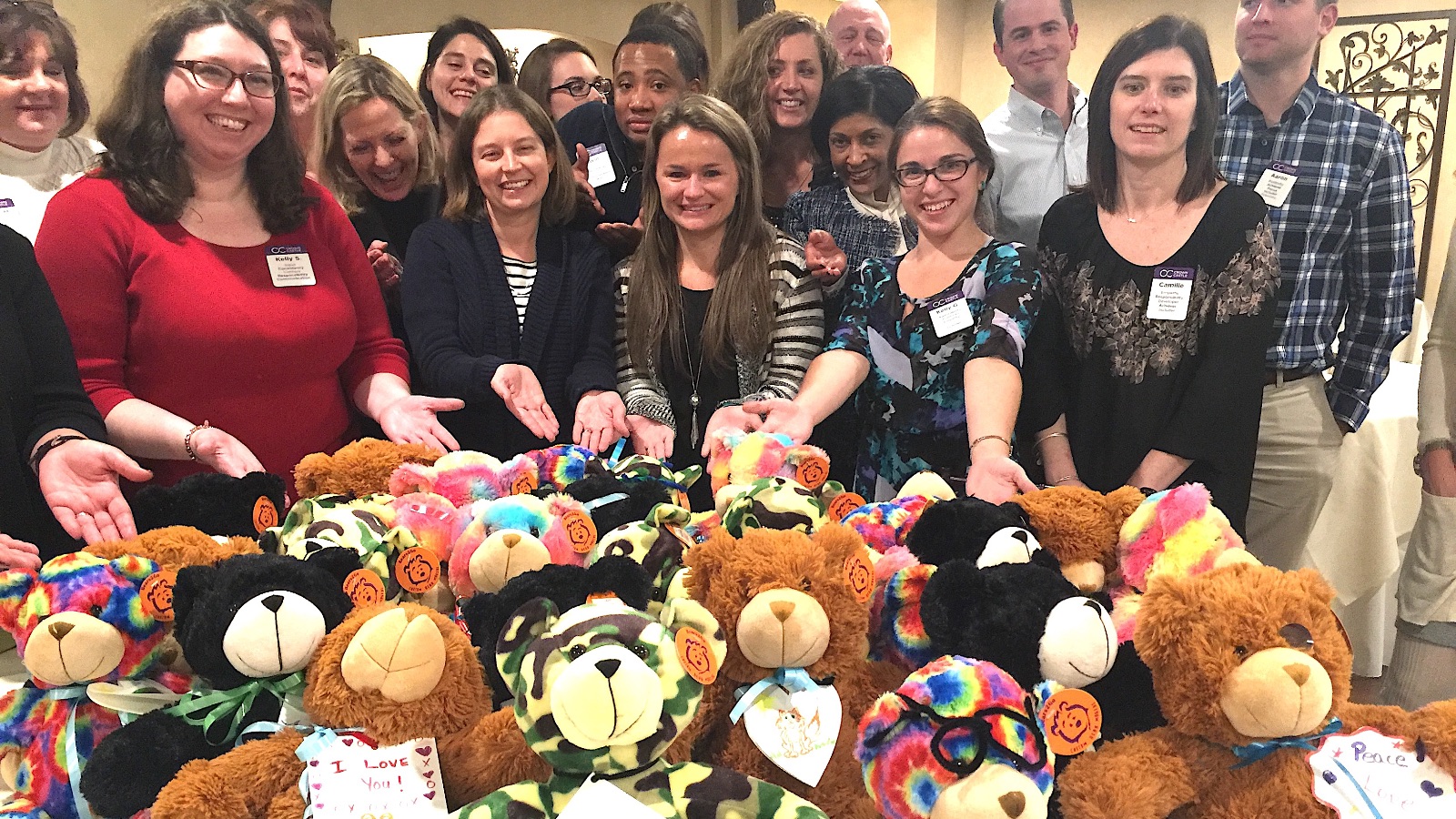
| Community impact | Charitable programs | The shared work produces a tangible contribution |
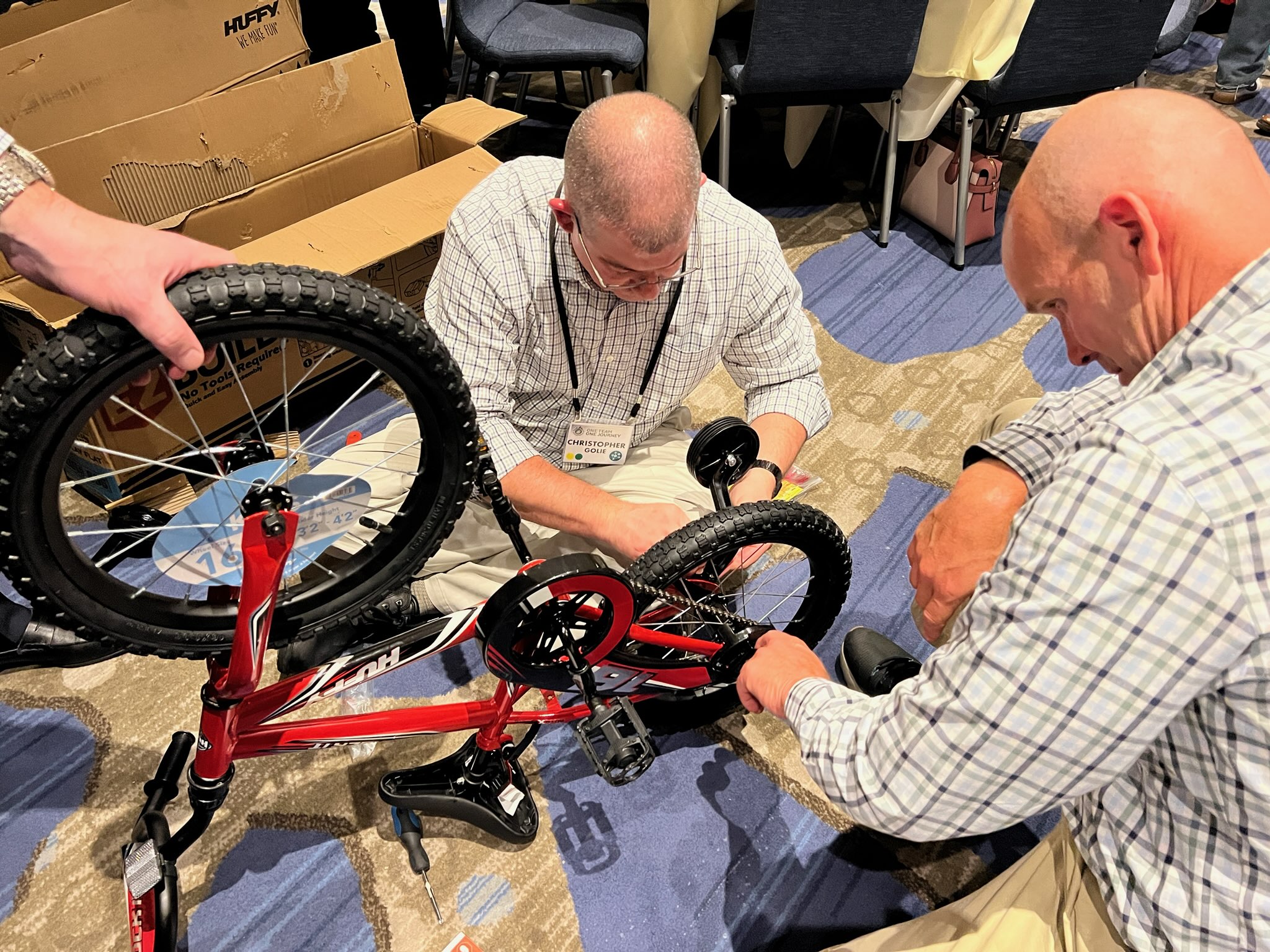
| Large all-hands connection | Facilitated build programs | Small-team roles feed into one larger experience |
If community impact is an important part of the event, Team Building Nation also offers a full range of charitable team building activities that combine team interaction with donations to nonprofit and community organizations.
Why Raleigh Is a Good Setting for More Collaborative Team Building
Raleigh is particularly well suited to outcome-focused team building because many local companies already operate in environments where innovation and cross-functional work matter.
Raleigh Economic Development identifies technology, life sciences, advanced manufacturing, headquarters operations, and professional and financial technology services among the city’s major industries. The wider Research Triangle adds universities, research organizations, startups, and major technology and life-science employers.
That means many Raleigh teams already work across technical disciplines, business functions, research groups, or hybrid structures.
The event should reflect that reality.
A group of engineers, project managers, sales leaders, designers, researchers, and operations employees does not necessarily need an activity where one skill determines who wins.
A better program gives different kinds of thinkers a useful role.
Think About Participation Before You Think About Competition
A corporate event works better when employees can contribute in different ways.
We look at whether an activity creates space for planning, building, communication, observation, creativity, leadership, and problem-solving rather than rewarding only speed or physical ability.
That matters with mixed teams.
A participant who does not want to race across a field may be excellent at diagnosing why the pipeline is failing. A quieter employee may notice the coordination problem no one else sees. Someone from design may interpret the task completely differently from someone in engineering or operations.
Those differences are useful when the program is built to use them.
Plan the Logistics Around the Experience
Even a strong program can fall flat when the format does not fit the room, agenda, or group.
Before choosing between team building activities in Raleigh NC, we recommend confirming:
Group Size
A 20-person leadership group and a 500-person company gathering need different facilitation, movement, equipment, and team structures.
Available Time
A 60-minute conference break calls for a different experience than a two-hour offsite block.
Indoor or Outdoor Setting
Raleigh gives you both options, but weather, mobility, venue rules, and available space should shape the choice.
Physicality
Decide how much movement is appropriate for the full group, not just the most active employees.
The Debrief
If the event has a business objective, leave enough time to connect what happened during the challenge with how the team works.
That does not mean turning the end of the activity into a seminar.
A few useful questions can be enough: Where did communication break down? What changed after the first test? Who had information the rest of the group needed? What made the second attempt better?
Give Raleigh Teams Something Worth Working on Together
At Team Building Nation, we have spent more than 15 years designing and facilitating corporate team building activities for groups of very different sizes, industries, and goals.
What we have learned is that the activity is only the starting point.
The stronger Raleigh team building events give people a reason to communicate, experiment, adjust, and rely on colleagues they may not normally work with. Fun still matters. Energy still matters. But there should be something underneath it.
If you are planning a Raleigh company retreat, leadership meeting, conference, or employee event, start by telling us what you want the team to experience differently.
Then we can build the activity around that.