A charity event can look meaningful on the calendar and still leave half the room watching from the sidelines. For HR and event planners, the real challenge is choosing an experience that gives people clear roles, creates natural interaction across departments, and makes the contribution visible without turning the event into a lecture about corporate values.
The strongest charity team building activities for employee engagement connect participation with purpose from the opening activity through the final donation. Below, we compare three formats that engage people in different ways: a hands-on bike build, a room-wide game show, and a location-based charity hunt. You will see how each activity works, which groups it suits, what logistics to consider, and how to evaluate engagement after the event.
What Makes a Charity Activity Engaging?
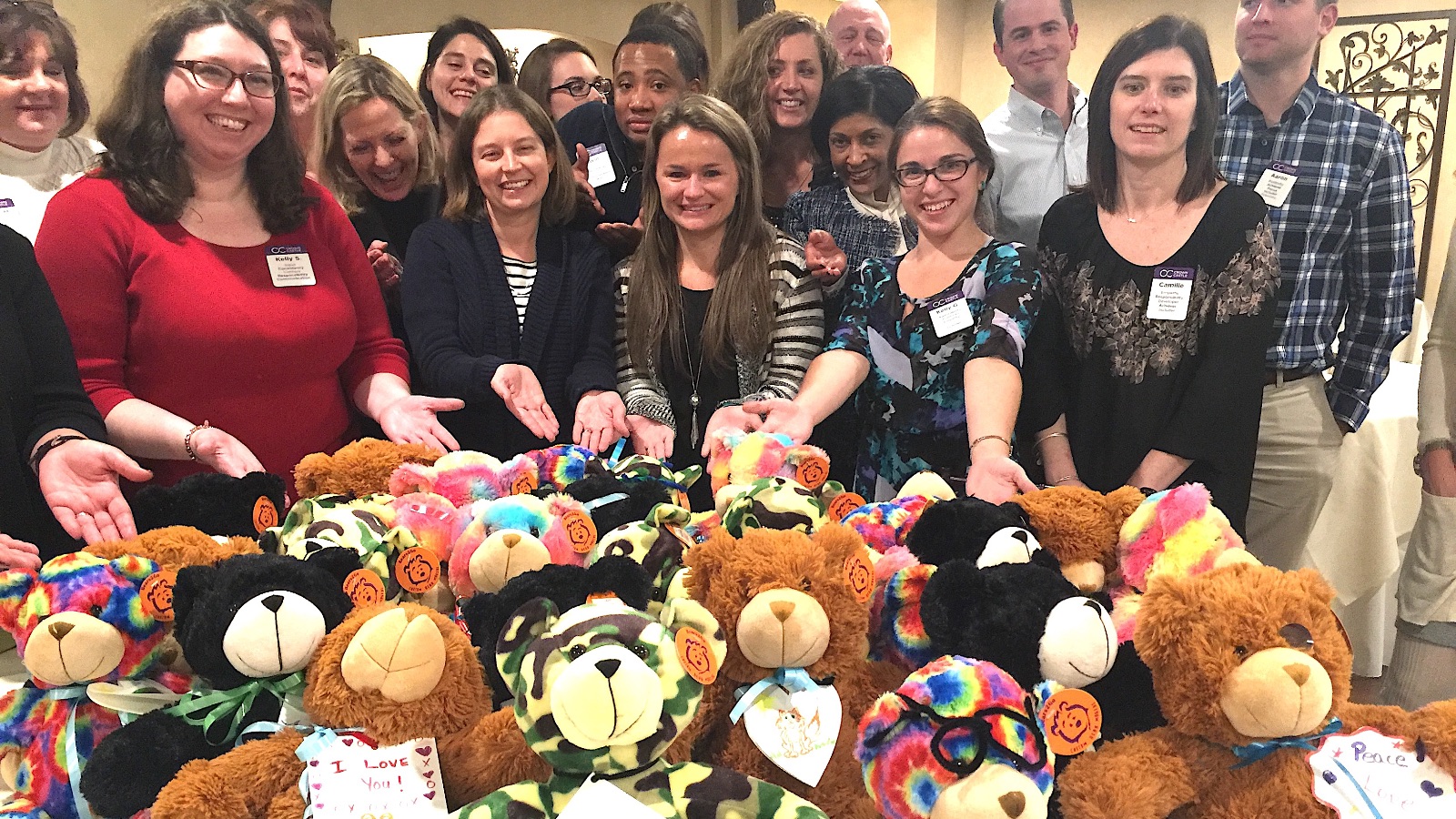
An engaging event gives people a reason to contribute and enough structure to know how. The charitable result matters, but the route to that result is where employees talk, make decisions, solve problems, and notice skills they may not see during a normal workday. A finished bike, a donation check, or a completed quest gives the group a concrete endpoint.
Look for interdependence. If one confident participant can complete the task while everyone else waits, the program has limited engagement value. Stronger formats divide the work into roles, create short decision cycles, and make progress visible. People should be able to contribute through planning, building, creativity, communication, observation, or encouragement, not through one narrow skill.
Accessibility and psychological comfort also shape participation. Some employees enjoy public competition, while others engage more readily in a small team with a defined task. Ask how the activity handles mobility needs, varied energy levels, language differences, and people who prefer a quieter role. A good fit lets participants stretch a little without making anyone feel exposed.
Finally, connect the event to a clear workplace goal. That may be cross-department interaction, stronger communication, a shared CSR moment, or simply time for colleagues to work together away from routine responsibilities. One primary goal makes the program easier to select and the feedback easier to interpret.
Compare the Top Three Options
These programs create three different kinds of engagement. The comparison below helps you narrow the choice before working through venue, timing, and accessibility details.
| Activity | Primary engagement mode | Published format | Strong fit for |
| #1 Charity Bike Build | Hands-on problem-solving and shared construction | Up to 3,000+; 1.5–2.5 hours; indoor or outdoor; low physicality | Groups that want a tangible donation and many practical roles |
| #2 Charity Game Show | Fast group decisions, friendly competition, and audience play | 12–1,000+; 1–1.5 hours; indoor or outdoor; low physicality | Conference agendas, short time windows, and large mixed groups |
| #3 Charity iHunt® | Exploration, puzzles, creative missions, and team navigation | Up to 2,000+; 2–2.5 hours; indoor or outdoor; low to moderate physicality | Groups that want movement, discovery, and a longer shared challenge |
#1 Charity Bike Build: Build Toward a Shared Finish
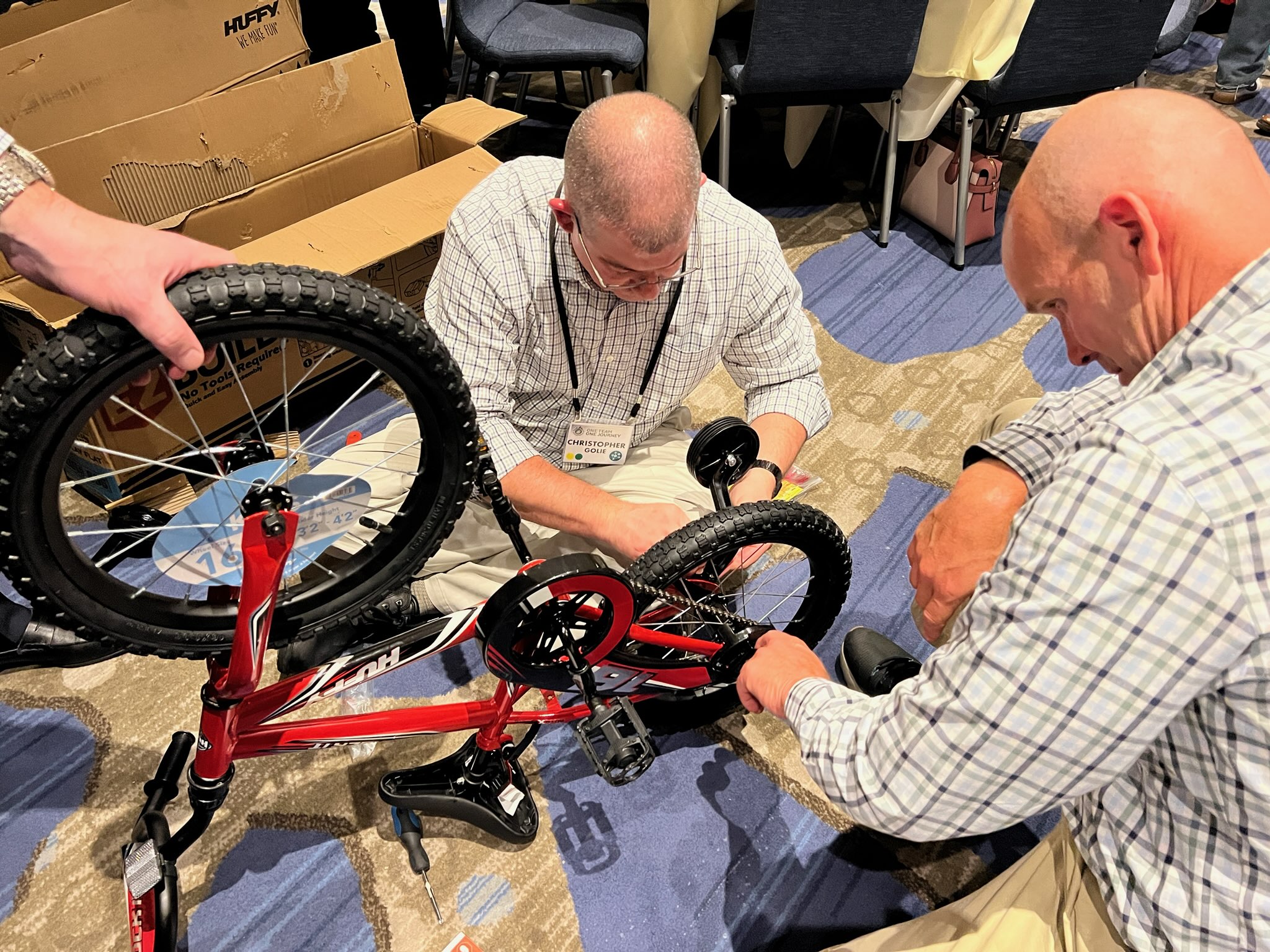
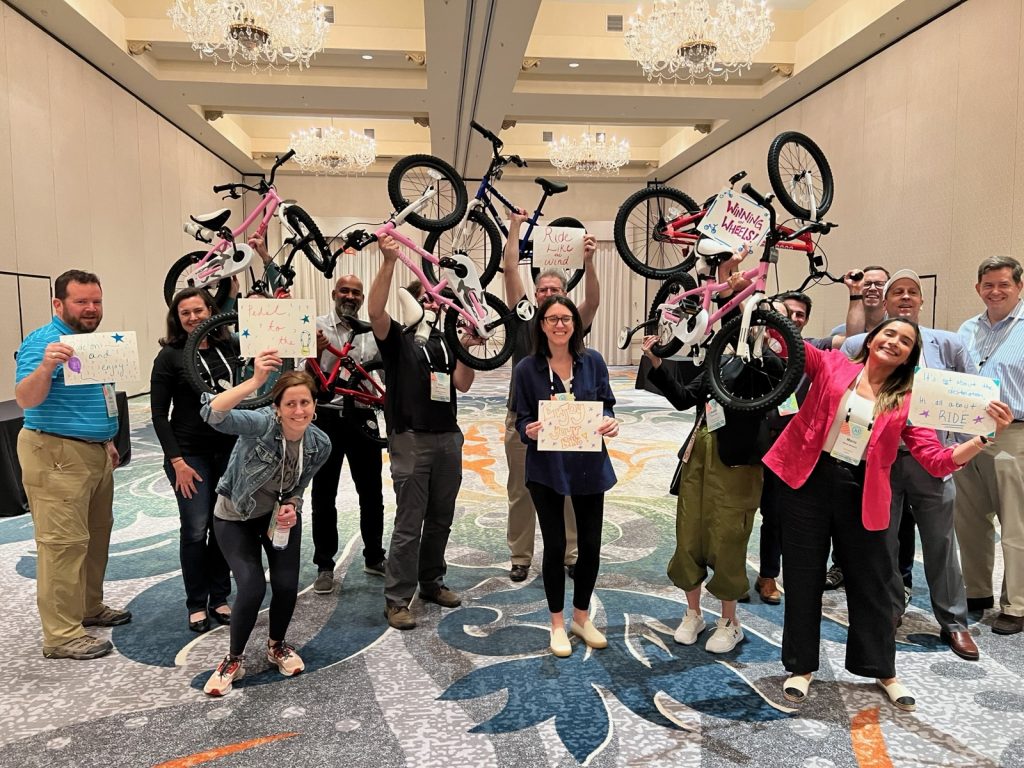
A Charity Bike Build earns the top position because it layers mental, creative, and practical work around a result everyone can see. Teams use staff-provided iPads to complete trivia plus photo and video challenges, exchange their points for bicycle parts, assemble the bikes, and write notes for the future recipients. Completed bikes pass through an inspection station before the closing celebration.
That sequence creates repeated opportunities to engage. One person may spot a trivia answer, another may organize parts, and someone else may keep the build moving or write the note. The task is easy to understand, yet no single role has to carry the whole experience. Rotating responsibilities can help colleagues avoid settling into the same patterns they use at work.
The format also gives the event a visible arc. Teams begin with separate challenges, watch the bicycle take shape, and finish with a tangible donation. If your goal is cross-functional collaboration, mix departments at each table and tell participants that every person should take on at least two roles. This keeps technical confidence from determining who gets involved.
Team Building Nation lists the program for groups up to 3,000+, with a typical length of 1.5 to 2.5 hours, indoor or outdoor settings, and low physicality. Those details make it flexible, but planners still need enough room for build stations, parts, safe movement, inspection, and the group close. Confirm your final schedule and floor plan based on group size, timeframe, space, and material needs.
#2 Charity Game Show: Give the Whole Room a Part
The Charity Game Show is the strongest option when your agenda is tight and you want a format that can hold the attention of a large room. Teams compete in fast survey-style rounds at face-off podiums. A tournament bracket narrows the field, while unanswered prompts can move to the audience so people beyond the stage remain part of the game.
For larger groups, rapid-fire trivia through a polling app can determine which teams reach the stage. This adds a second participation channel and gives seated teams something consequential to do. Short team huddles before submitting answers can create more interaction than asking one spokesperson to respond immediately.
This option works well inside a conference, leadership meeting, or dinner program because the activity runs 1 to 1.5 hours and has low physicality. Team Building Nation publishes a group range of 12 to 1,000+ and lists both indoor and outdoor settings. The program includes professional facilitation, production coordination, game show equipment, customized software, and a giant check for the chosen charity.
Public competition can energize a room, but it should not reward the same quick voices in every round. Rotate stage representatives, vary who submits digital answers, and give teams a few seconds to consult. If the group includes people who dislike being put on the spot, make stage participation opt-in and treat audience contributions as equally important. Those choices protect the lively pace while widening the ways people can join.
#3 Charity iHunt®: Add Movement and Discovery
A Charity iHunt® turns the destination itself into part of the event. Teams explore local sights, culture, and history while completing location-specific trivia, charitable trivia, puzzles, photos, videos, and facilitator-led physical, mental, or creative challenges. Some challenges help teams earn items for donation, and the event closes with an interactive slideshow, medals, and a presentation of the charitable contribution.
This is a useful format for employees who engage through movement and discovery. Navigation creates constant small decisions: which location to visit, how to divide tasks, who will solve a clue, and how to manage the clock. Creative missions also reveal talents that may stay hidden in a seated meeting. The shared route gives people easy conversation starters, which can help newer colleagues connect with the group.
Team Building Nation lists Charity iHunt® for groups up to 2,000+, a length of 2 to 2.5 hours, indoor or outdoor settings, and low to moderate physicality. Those published ranges do not replace route planning. Review walking distances, stairs, rest points, washroom access, weather exposure, traffic, and the ability to create equitable roles. An indoor version or compact route may be the better choice when mobility or weather is a concern.
The program is strongest when exploration supports the purpose instead of distracting from it. Introduce the charity at the kickoff, explain how completed challenges connect to the contribution, and reserve time for the finale. Teams should leave understanding both what they accomplished together and who the donation is intended to support.
Match the Program to Your Employees
Program selection gets easier when you separate what sounds exciting from what your group can genuinely participate in. Use these planning questions before requesting a proposal:
- Participation comfort: Will people prefer hands-on work, public competition, or small-team exploration?
- Time window: Can the agenda hold a 1 to 1.5-hour game show, or is there room for a longer build or hunt?
- Movement and accessibility: What mobility, sensory, language, or energy needs should the format accommodate?
- Venue and route: Is there enough clear space for build stations, production equipment, or safe movement between hunt locations?
- Group structure: How many teams will you need, and how will you mix departments, seniority levels, or office locations?
- Cause fit: Does the donation type connect credibly with your CSR priorities, community relationships, or a charity your employees already support?
Send the facilitator any non-negotiable requirements early. Group size, timeframe, space, and materials can affect program design. Clear information makes it easier to preserve the central experience while adapting the details to your event.
Measure the Engagement You Planned For
Employee engagement is too broad to judge with one question such as “Did you have fun?” Start with the outcome that influenced your program choice. If your goal is cross-department connection, ask whether participants worked with someone new. If the goal is inclusive contribution, ask whether people felt they had a meaningful role. If the goal is CSR awareness, ask whether employees understood the charitable result and how their work connected to it.
Keep feedback short enough that people will complete it. A three-question pulse sent within a day can cover participation, connection, and purpose, followed by one open comment. Review participation by team or location only when that data is useful and appropriate. Attendance alone shows reach, not the quality of the experience.
Facilitator observations and a brief manager debrief can add context. Note where energy rose, where instructions created confusion, whether roles were evenly distributed, and whether the finale landed clearly. Treat any claimed workplace effect with care. One event can create a useful shared experience, but it cannot prove long-term changes in morale, collaboration, or retention by itself.
Use the feedback to improve the next event. You may learn that employees want more time for small-team decisions, a less public competitive format, or a clearer explanation of the cause. That makes measurement part of program design, not a scorecard added after the fact.
Choose a Format That Connects Participation With Purpose
The best choice depends on how your people are most likely to participate. Choose Charity Bike Build when a tangible shared task will create momentum, Charity Game Show when a short, high-energy format needs to include a large room, or Charity iHunt® when movement and discovery fit the group. Then shape the roles, pacing, accessibility, and charitable close around one clear engagement goal.
At Team Building Nation, we plan and facilitate charitable programs for corporate groups across a wide range of sizes and settings. Share your group size, time window, venue, accessibility needs, preferred cause, and intended outcome with us. We can help you compare the formats and build a proposal around the way your employees will participate.