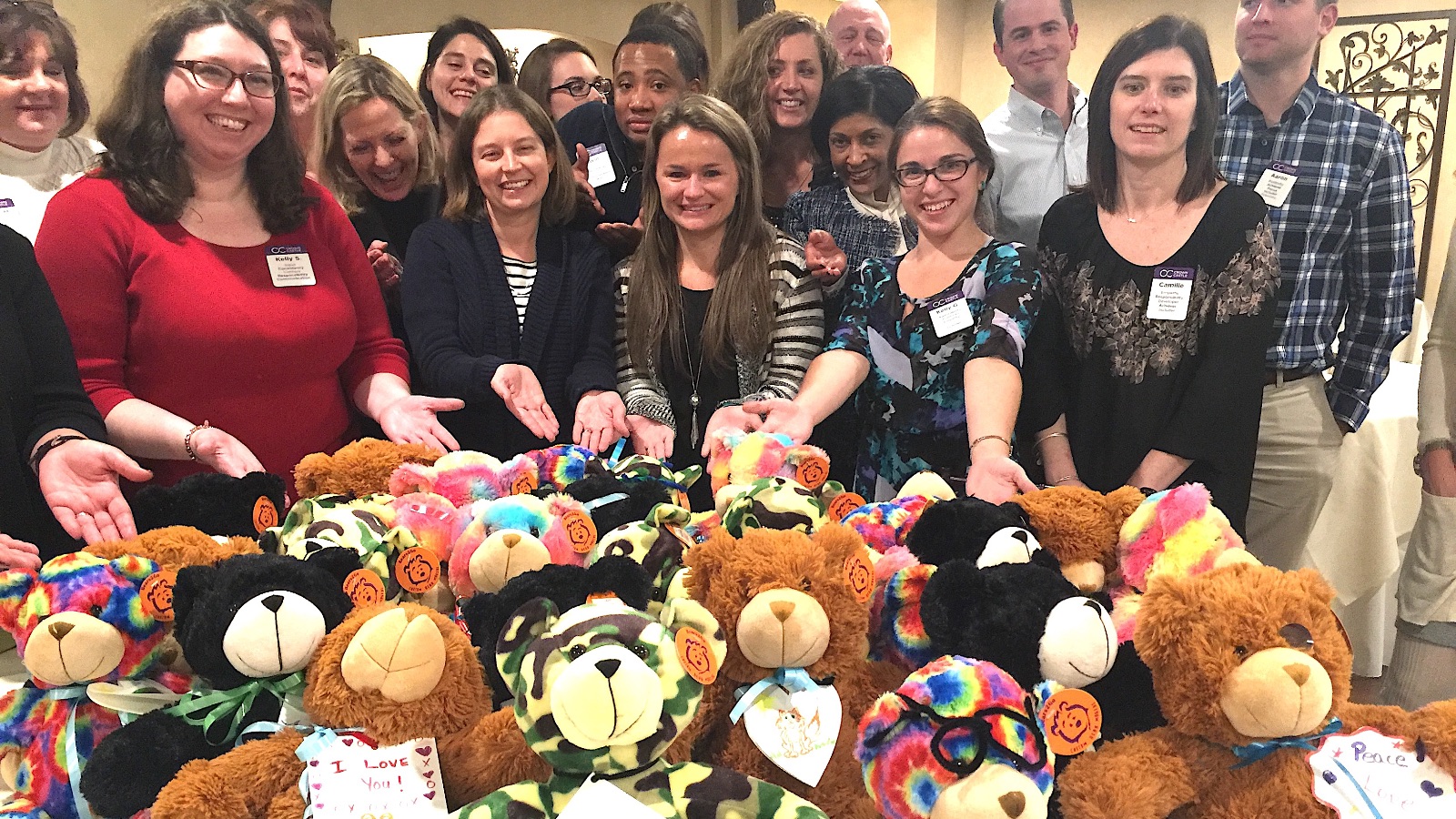
Team charity events bring employees together around a shared purpose that extends beyond the company. They are structured group activities where teams complete a hands-on challenge that directly benefits a charitable cause.
This guide covers what these events are, why they work better than traditional team building, and which formats deliver the most impact for both the team and the community.
What Team Charity Events Actually Are
A team charity event is a facilitated group experience where the output of the activity is a real donation to people in need. Teams are not just playing a game or completing a challenge for internal recognition. They are building something, assembling something, or raising something that goes directly to a nonprofit partner or community organization.
The key difference between a charity team event and a standard team building activity is the external beneficiary. When the group finishes, something meaningful exists that did not before. A child receives a bike. A person with a disability receives a wheelchair. That tangibility is what makes these events stick in ways that other formats do not.
Most programs run between 90 minutes and three hours. They are hosted on-site at your venue and require no specialized skills from participants.
How Team Charity Events Differ from Volunteering Days
Volunteering days are valuable, but they often lack structure. Employees show up, do tasks assigned by a coordinator, and rarely interact as a full team. The experience is meaningful, but it does not necessarily strengthen working relationships.
Team charity events are designed differently. Every element is intentional. Groups are organized into teams, roles are distributed, and the challenge requires coordination to complete. The charity outcome is the goal, but the collaboration is the mechanism.
That design distinction matters because it means your team gets two outcomes simultaneously: a culture-building experience and a tangible community contribution. Neither is incidental. Both are deliberate.
Why the Charitable Component Changes Team Dynamics
Purpose shifts behavior. When employees know their effort has a direct impact on someone outside the organization, their level of engagement changes.
Teams in charity events communicate more openly, take more initiative, and support each other more readily than in purely competitive formats. The external beneficiary removes the ego from the room. No one is trying to look good. Everyone is trying to get the job done because the reason to get it done matters.
This shift in group psychology is well documented in organizational behavior research. Prosocial motivation, doing something that benefits others, consistently produces higher levels of sustained effort and cooperation than self-serving motivation. Team charity events are one of the most direct ways to activate that dynamic in a group setting.
Key reasons charity team events drive stronger collaboration:
- Teams share a common goal that has clear human stakes
- No one individual can complete the build alone
- Roles naturally distribute based on skill and capacity
- The end-of-event reveal creates a shared emotional moment
- The experience gives teams a story they carry forward together
The Best Team Charity Event Formats for Corporate Groups
Not all charity programs deliver the same experience. The formats that work best for corporate teams are hands-on, time-bounded, and structured around a clear build challenge.
Charity Bike Build Creates Connection Through Hands-On Assembly
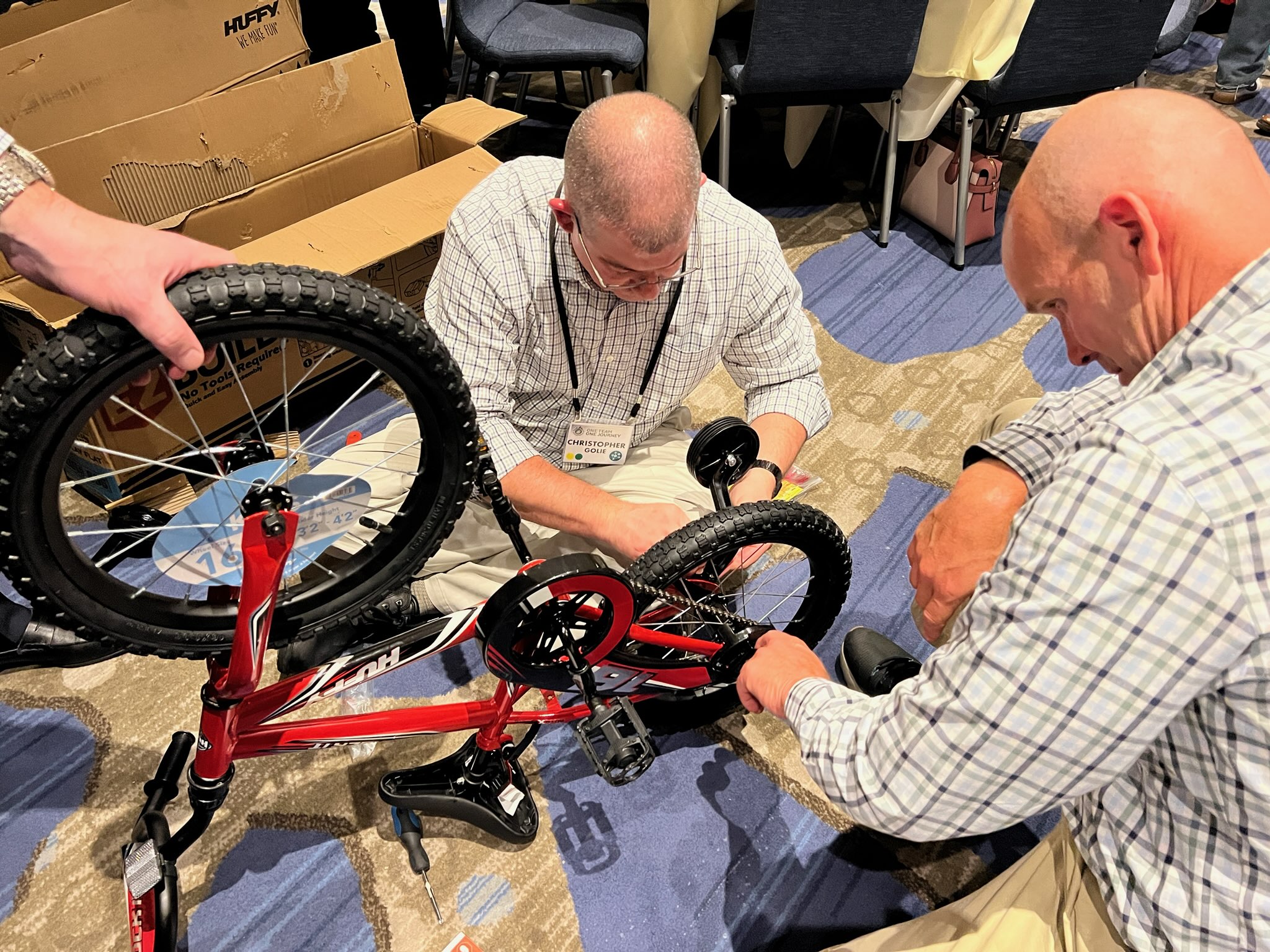
The Charity Bike Build is one of the most recognized team charity programs in the industry. Teams assemble bicycles from components, working through a structured challenge that requires communication, problem-solving, and coordination at every step.
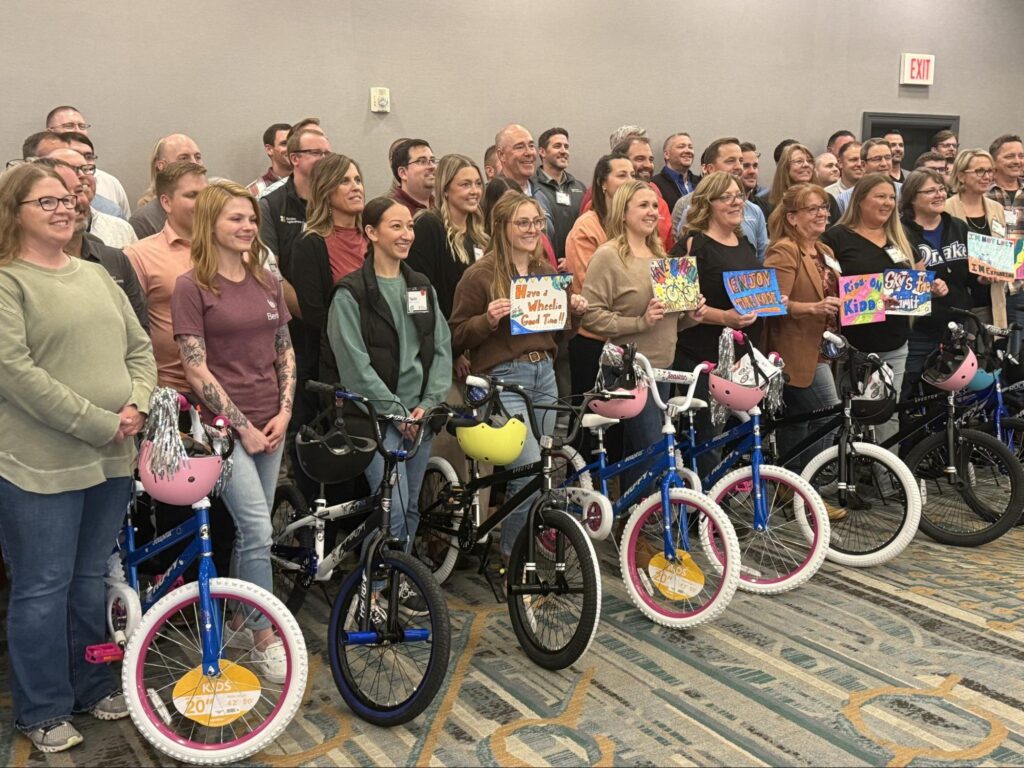
At the end of the session, the completed bikes are donated to children in need through a nonprofit partner. The recipient presentation is often the most memorable moment of the event. Watching a child receive a bike that your team built together creates an emotional anchor that no keynote speech or slide deck can match.
The build itself is designed so that no technical knowledge is required. Participants do not need mechanical experience. The challenge is structured to reward teamwork, not expertise, which means every employee in the room can contribute meaningfully regardless of their role or background.
The Charity Bike Build works well for groups ranging from small departments to large company-wide events. It scales without losing the hands-on, intimate quality that makes it effective.
What makes this format particularly strong for corporate teams:
- Everyone physically contributes to the finished product
- The challenge has a clear beginning, middle, and end
- Team roles shift naturally across build phases
- The donation moment creates a shared emotional peak
- Employees leave with a story that is genuinely worth telling
This program is frequently chosen for annual kickoffs, leadership retreats, employee appreciation events, and client-facing experiences where companies want to demonstrate their values in action.
Charity Wheelchair Build Delivers High-Impact Purpose at Every Scale
The Charity Wheelchair Build follows a similar structure to the bike build but carries a different emotional weight. Teams assemble mobility wheelchairs that are donated to individuals with physical disabilities, often through international aid organizations.
The recipient profile creates a strong sense of global impact. Your team in a hotel ballroom or corporate office is directly connected to someone who will regain mobility because of what they built together that afternoon. That connection across distance and circumstance is something employees do not forget.
The build process itself demands clear communication and careful assembly. Teams must follow sequential steps, check each other’s work, and troubleshoot when pieces do not fit as expected. The challenge mirrors real workplace dynamics in a way that feels organic rather than forced.
This format is especially effective for organizations with a strong social responsibility mandate or teams that want an experience that feels proportional to the weight of their company’s stated values. It is one thing to put community impact in a mission statement. It is another to build a wheelchair alongside your colleagues and watch it get loaded into a donation van.
The Charity Wheelchair Build suits mid-size to large groups and pairs well with a brief company giving or CSR presentation before or after the build session.
Why Companies Choose Team Charity Events Over Standard Activities
Organizations that invest in team charity events are typically looking for something that works on multiple levels at once. They want team building that holds up to scrutiny, engagement that does not feel manufactured, and a way to demonstrate company values that goes beyond messaging.
Charity events deliver on all three because the value is self-evident. The team builds something real. The donation is documented. The impact is traceable. There is no gap between what the company says it values and what it actually did that afternoon.
That alignment between stated values and visible action is increasingly important to employees. Studies consistently show that purpose-driven work experiences improve retention, increase discretionary effort, and strengthen loyalty. A well-run team charity event is a compressed version of that dynamic.
There is also a practical consideration. Many companies struggle to find team building formats that work equally well for employees at every level, from the newest hire to the senior leadership team. Charity builds remove hierarchy from the experience. Everyone is assembling parts, solving the same problems, and working toward the same goal. That leveling effect is rare and valuable.
How to Get the Most Out of a Team Charity Event
Preparation determines how much your team gets out of the experience. A few things consistently separate the events that people remember from the ones that blur into the calendar.
Brief your team beforehand. Let employees know what they are building and who benefits. That context makes the activity meaningful from the first minute rather than the last.
Assign a team lead for each group. Not to control the process, but to keep momentum and make sure quieter voices are included.
Plan for the reveal. The donation presentation at the end of the event is the emotional centerpiece. Give it time and space. Do not rush into the next agenda item.
Capture it. Photos and video from the build and the donation moment give your team a shared artifact that reinforces the experience long after the day is over.
Follow up internally. A short message from leadership the next day that acknowledges what the team built and who it helped closes the loop and signals that the experience was taken seriously at every level of the organization.
How Team Building Nation Runs Charity Events That Deliver
At Team Building Nation, we handle every element of your charity team event from logistics to facilitation to the nonprofit partnership. Our program coordinators manage the build materials, the team structure, and the donation handoff so your organization can focus entirely on the experience.
Our facilitators are trained to bring energy and intention to every session. They know how to read a room, distribute roles fairly, and create the conditions where every participant feels like they contributed to something that mattered.
We have run charity builds for companies of all sizes across every major sector. If you are planning an event and want a format that your team will genuinely talk about, reach out and we will match you with the right program.