Simply booking a larger venue won’t cut it when you are organizing team building for hundreds of employees. It demands a completely different level of strategic logistics. You also need inclusive planning to ensure the experience resonates. We created this guide to break down the activities and facilitation strategies that serve these large groups best, alongside the measurement tools you need to track success.
Walking into a massive enterprise office often feels less like joining a team and more like entering a busy train station. You might recognize faces or maybe nod in the hallway, but actual connection is scarce.
That statistic represents a massive leak in potential productivity.
Throwing a company-wide happy hour rarely fixes the issue. That is just a party. Effective team building for hundreds of people requires structure and a strategy that forces interaction beyond the usual cliques that form near the appetizer table. At Team Building Nation, we focus on events that turn strangers into collaborators.
In this guide to map out exactly how to bridge that gap, covering everything from complex logistics and activity selection to measuring the actual return on investment. But before planning the logistics, we need to agree on the scale we are dealing with.
Defining the Scope: What Constitutes a ‘Large Group’?
‘Large’ is a subjective term in this industry.
Ask three different planners what it means, and you might hear anything from twenty people to two thousand. But to us, size isn’t just a vague feeling; it is a hard count that dictates every logistical move you make from the contract signing to the closing remarks.
We generally break groups down into three distinct tiers to keep the planning manageable:
- Mid-sized tier, consisting of 50 to 100 participants. At this level, a single skilled facilitator can usually command the room without calling in backup.
- Large groups (100-500). The actual physics of the space change here. Since you can no longer rely on voice projection alone, sound systems and structured breakout sessions become non-negotiable requirements to keep things on track.
- Enterprise (500+). This is a different beast entirely. It requires multiple sub-teams, complex orchestration, and logistics that border on military precision.
Why does this distinction matter?
Because a strategy that engages 40 people will fall flat if you try to apply it to 400.
Handling these larger numbers requires a firm grasp on the four pillars of effective team building:
- setting clear goals
- defining roles
- establishing processes and
- nurturing interpersonal relationships
In a small conference room, these tend to happen on their own. Organically. You usually don’t have to force the issue. But in a ballroom of 300, we know the reality is quite different. At that scale, the dynamic must be engineered.
If you ignore the structural differences, you lose the ROI.
Logistics and Crowd Management for 100+ People
Moving people is one challenge. Being heard is an entirely different beast.
If you assume you can simply project your voice over a banquet hall filled with 150 chattering employees, you are setting yourself up for a strained throat and a confused crowd. Audio support isn’t a luxury in this scenario. It is a necessity. You need a high-quality microphone system and large, visible screens.
Think about the user experience.
If the person in the back row cannot see the instructions or hear the prompt clearly, they check out immediately. And once they disengage, getting them back is nearly impossible.
This brings us to the facilitator.
A professional facilitator locks in on these dynamics. They manage the flow and smooth out transitions, keeping energy levels high without getting bogged down by company politics (or the distinct participation anxiety internal staff might feel). They just run the show. There is one other major factor, though. Look at your venue through the lens of acoustics rather than just aesthetics.
High ceilings and concrete floors look industrial and chic. Unfortunately, they also create an echo chamber that makes communication exhausting. Ensure your space absorbs sound and allows for physical movement zones. You need a dedicated ‘stage’ for instruction and separate areas for the actual activity to prevent collisions.
With the tech tested and the room prepped, the structure is safe. Now we can look at what actually fills that time, depending on how much you want to spend.
Premium and Vendor-Led Experiences
Sometimes, you need to impress. Or perhaps you just need the burden of execution taken off your shoulders so you can actually participate.
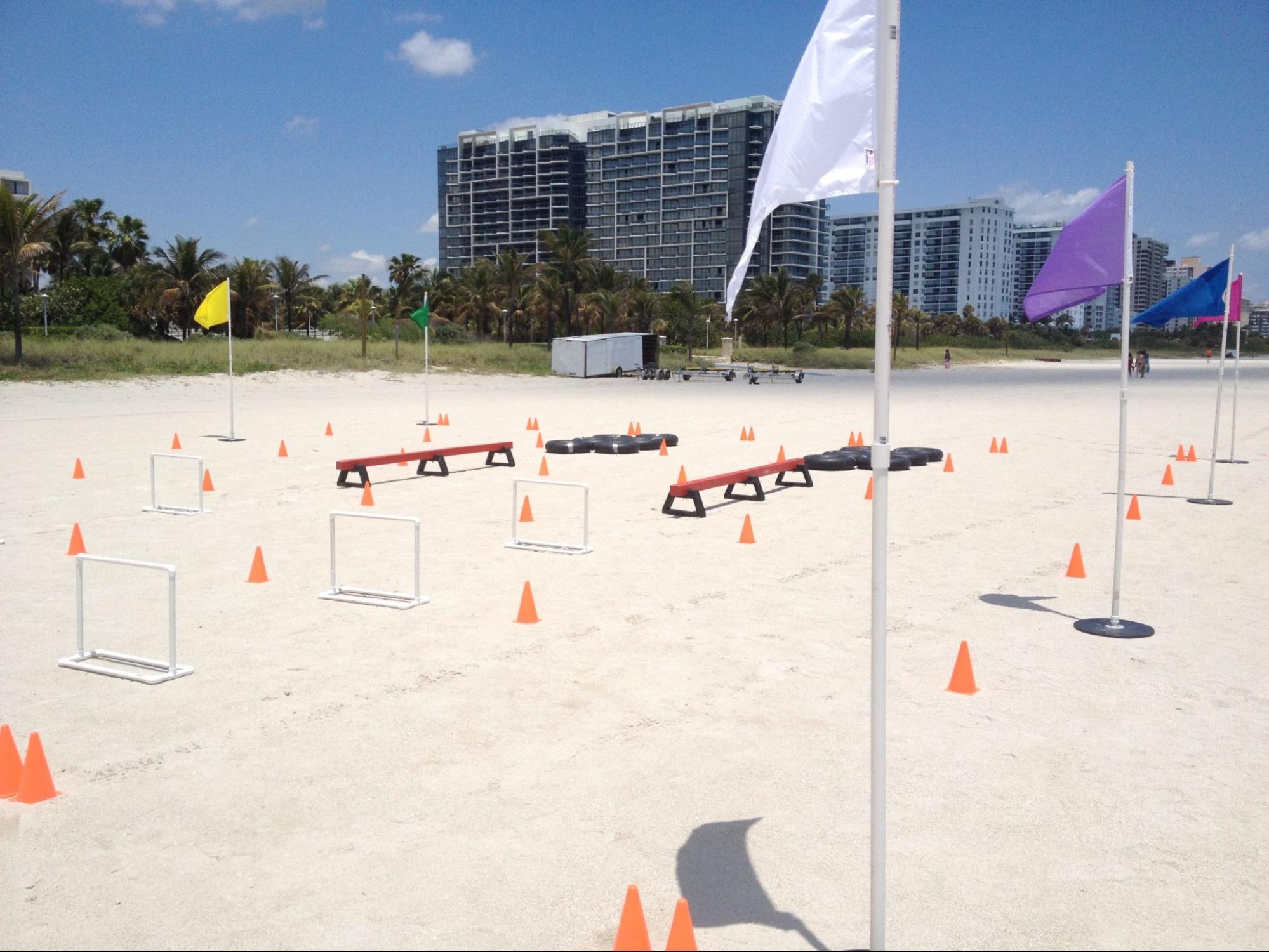
Our Team Olympics program exemplifies this perfectly. We transform your venue into an Olympic arena complete with opening ceremonies, custom team banners, and a series of inclusive challenges that range from mental puzzles to hilarious physical activities (think giant Jenga, human foosball, and relay races with a twist). What makes this work for large groups is the rotating station format – teams move through different events simultaneously, keeping everyone engaged while avoiding bottlenecks. The best part? We handle all the equipment, scoring, and facilitation, so your leadership team can actually participate instead of playing referee. The closing medal ceremony creates a shared moment of triumph that resonates long after everyone returns to their desks.
Another standout in our portfolio is City iHunt®, our tech-driven urban adventure that turns your city into a massive game board. Armed with iPads loaded with our custom app, teams navigate through downtown solving challenges, capturing photos, and completing missions that blend local culture with company values. This isn’t your grandmother’s scavenger hunt – it’s a GPS-enabled, real-time scored competition that can handle groups from 50 to 500+ without breaking a sweat. The app’s backend allows us to monitor progress, push bonus challenges to specific teams, and ensure everyone stays on track. For companies looking to combine team building with local exploration (perfect for conferences or off-sites), City iHunt® delivers an unforgettable experience that gets people talking about strategy, not just following a checklist.
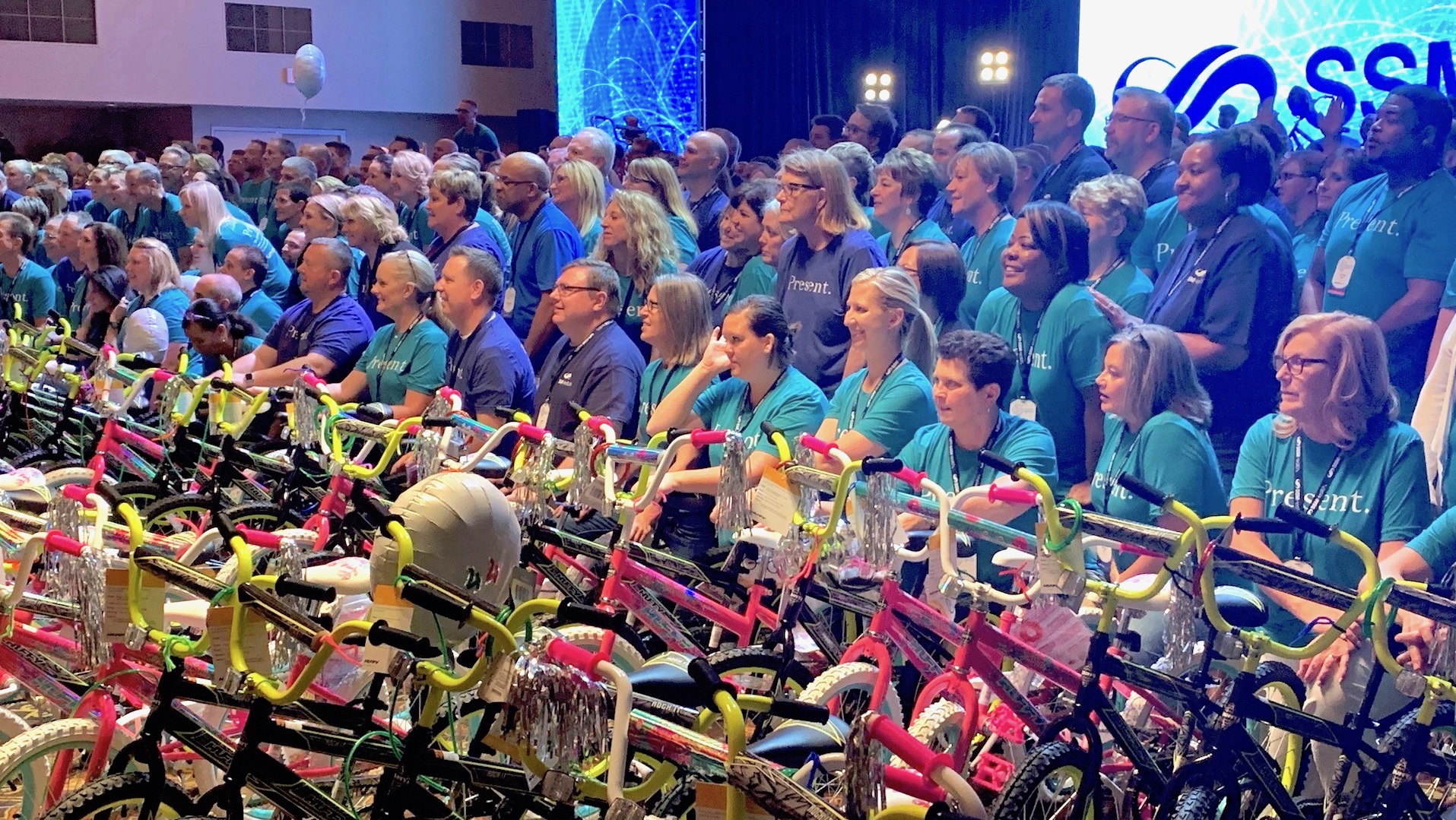
Whenever clients ask us for a high-polish activity that handles large groups without losing that fun factor, we also point them toward Charity Bike Builds. It hits a specific sweet spot. Your team works together to construct bicycles (skateboards and wheelchairs are options, too), and the whole thing wraps up with a donation to a local children’s organization. The emotional payoff is huge.
Professional workshops are another route. These aren’t just lectures; they are facilitated sessions using psychometric tools or specialized coaching that internal managers might not be qualified to deliver.
Adapting for Virtual and Hybrid Large Teams
Managing a crowd in a ballroom is hard enough. On a video call, it becomes a logistical minefield.
We often see companies try to run large-scale virtual events like standard town halls, but passive listening kills engagement. You have to break the pattern.
Use breakout rooms, but use them with intent. Randomized groups are fantastic for shaking up the clique mentality and sparking quick, low-stakes connections between people who rarely interact. Conversely, pre-assigned groups allow for focused strategic work. Just keep the numbers low. Six people can have a conversation, but sixty is just an audience.
Tech matters here.
Standard video tools often struggle to make games engaging for 100+ concurrent users. You need robust platforms – think Kahoot! or dedicated virtual event apps – that can handle high traffic without lagging. This investment pays off.
The hybrid model is even trickier.
We see this at times: remote attendees are treated like passive observers watching the real event unfold on-site. This is a fast track to disengagement. Instead, assign a dedicated facilitator specifically for the virtual crew. If the people in the room are tackling a physical puzzle, let the remote team work on a digital equivalent at the exact same time. (It keeps the playing field level.) Then, update the scores live on the main screen so everyone feels part of the same competition.
Engagement is the goal. However, demanding high-energy participation can sometimes backfire if we ignore the different ways people interact with technology and each other.
Ready to Transform Your Large-Scale Team Building?
You’ve seen the blueprint. You understand the challenges. Now it’s time to turn those insights into action.
At Team Building Nation, we don’t just plan events – we engineer experiences that transform disconnected employees into collaborative powerhouses. Whether you’re coordinating 100 people or 1,000, we bring the expertise, professional facilitation, and proven frameworks that turn logistical nightmares into strategic wins.
Don’t let another quarter pass with your teams operating in silos. Contact us today to discuss your specific team building challenges and goals and discover why Fortune 500 companies trust us to bridge the gap between strangers and collaborators.